Telco Leader
Telco Leader
2022-2023
2022-2023
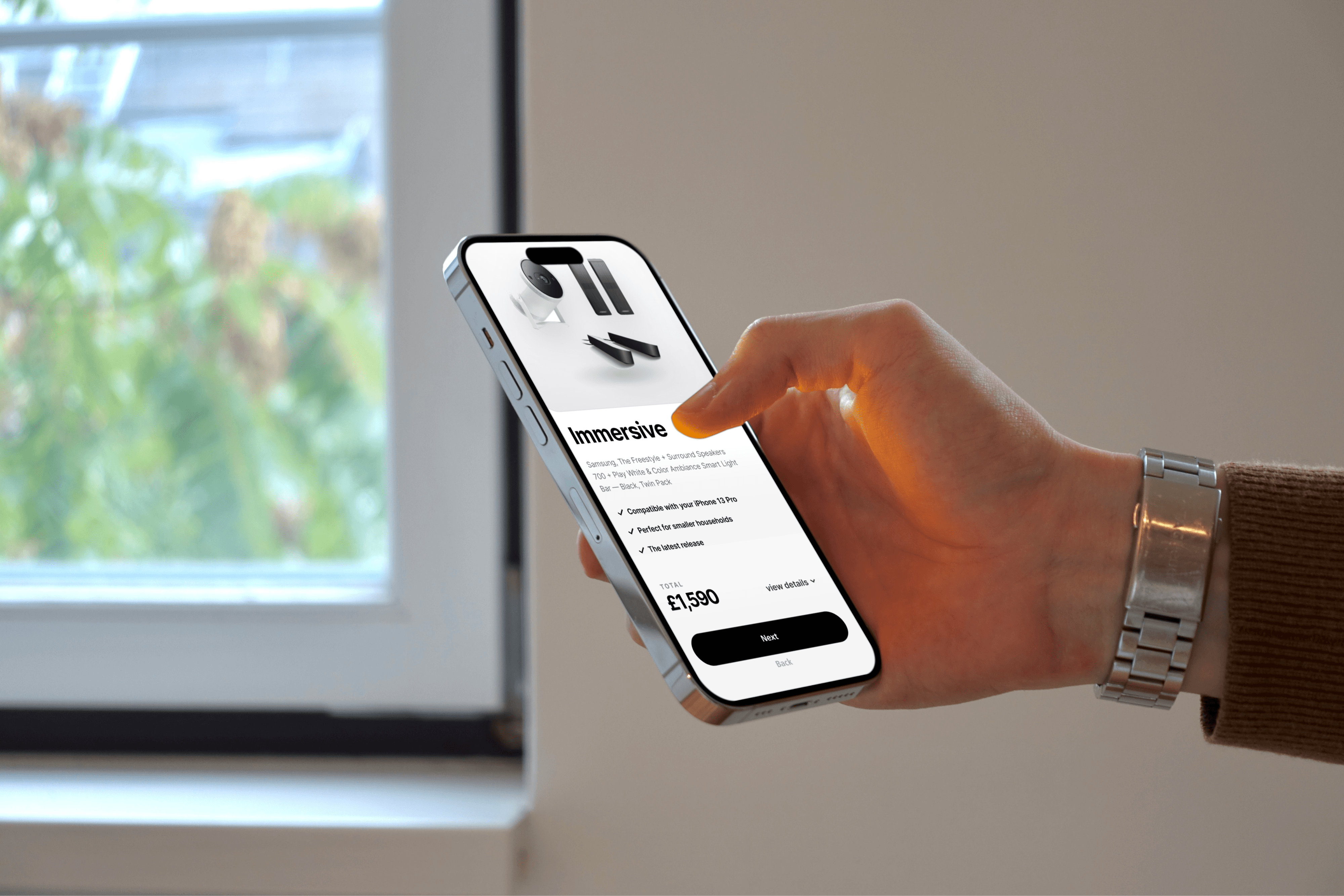
A leading telco company had an idea born in their R&D lab: a personalised digital guide to help customers discover and purchase home tech products that fit into their existing setups. Before investing further, they needed to know if it was worth building. I collaborated with an award-winning experience agency to find out.
Client
Telco Leader
Year
2022-2023
Services
Research, Prototyping, Project Management
Services
Research, Prototyping, Project Management
Telco Leader
2022-2023
(Context)
Our goal was to validate whether the proposition appealed to customers, and whether smart home tech was the right product area to focus on.
After running a few workshops getting the stakeholders aligned on what the exact goals should be, we landed on four questions:
Is the proposition clear?
Are people comfortable sharing basic household data in exchange for personalised recommendations?
How do people find the setup experience
Are they willing to save their details for later?
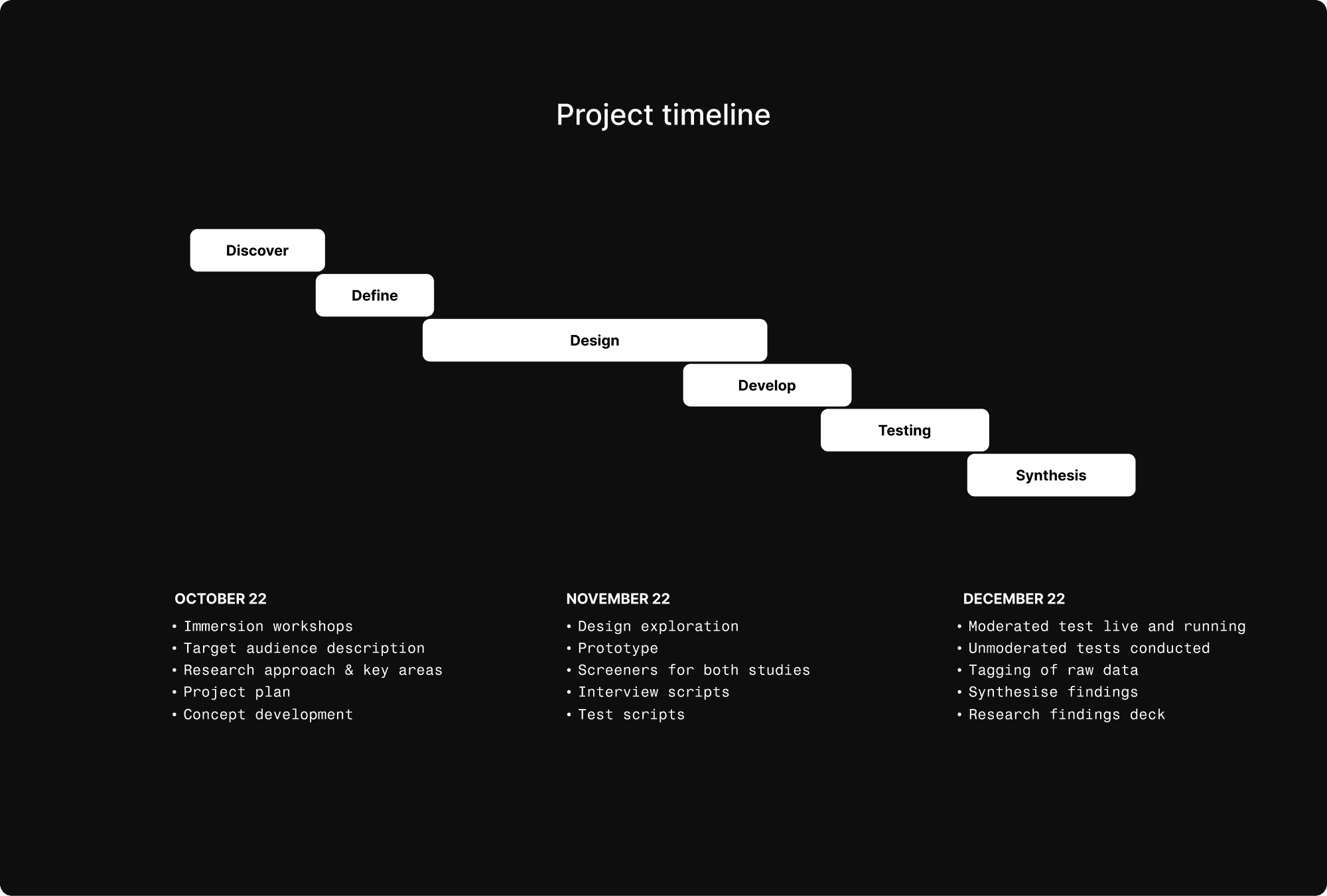
Participants were split into two groups: 11 in moderated 1:1 interviews, and around 150 in an unmoderated interactive survey via Maze with an embedded prototype. Heatmap analysis added an additional layer of usability insight.
Our goal was to validate whether the proposition appealed to customers, and whether smart home tech was the right product area to focus on.
After running a few workshops getting the stakeholders aligned on what the exact goals should be, we landed on four questions:
Is the proposition clear?
Are people comfortable sharing basic household data in exchange for personalised recommendations?
How do people find the setup experience
Are they willing to save their details for later?
Participants were split into two groups: 11 in moderated 1:1 interviews, and around 150 in an unmoderated interactive survey via Maze with an embedded prototype. Heatmap analysis added an additional layer of usability insight.
[Process]
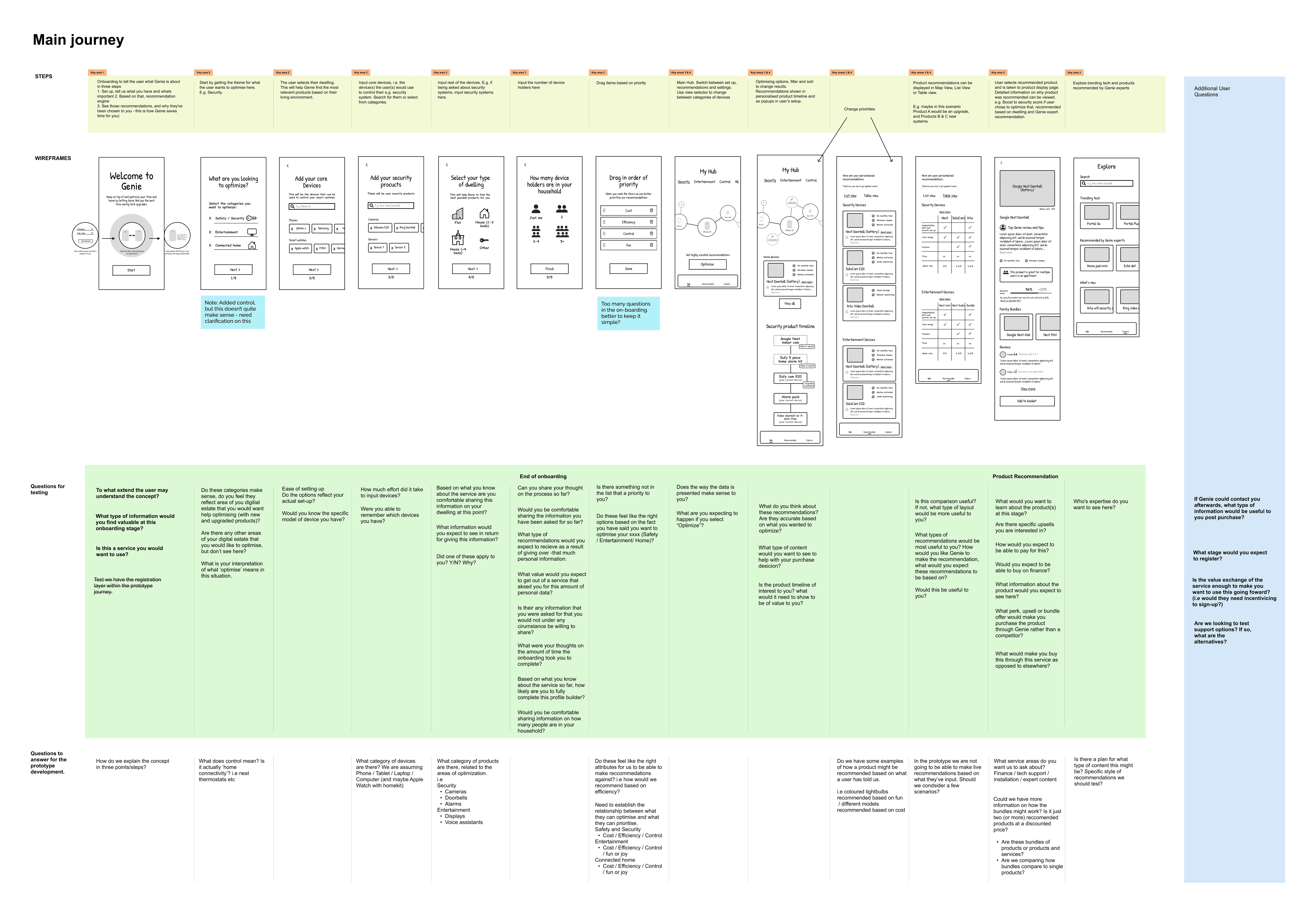
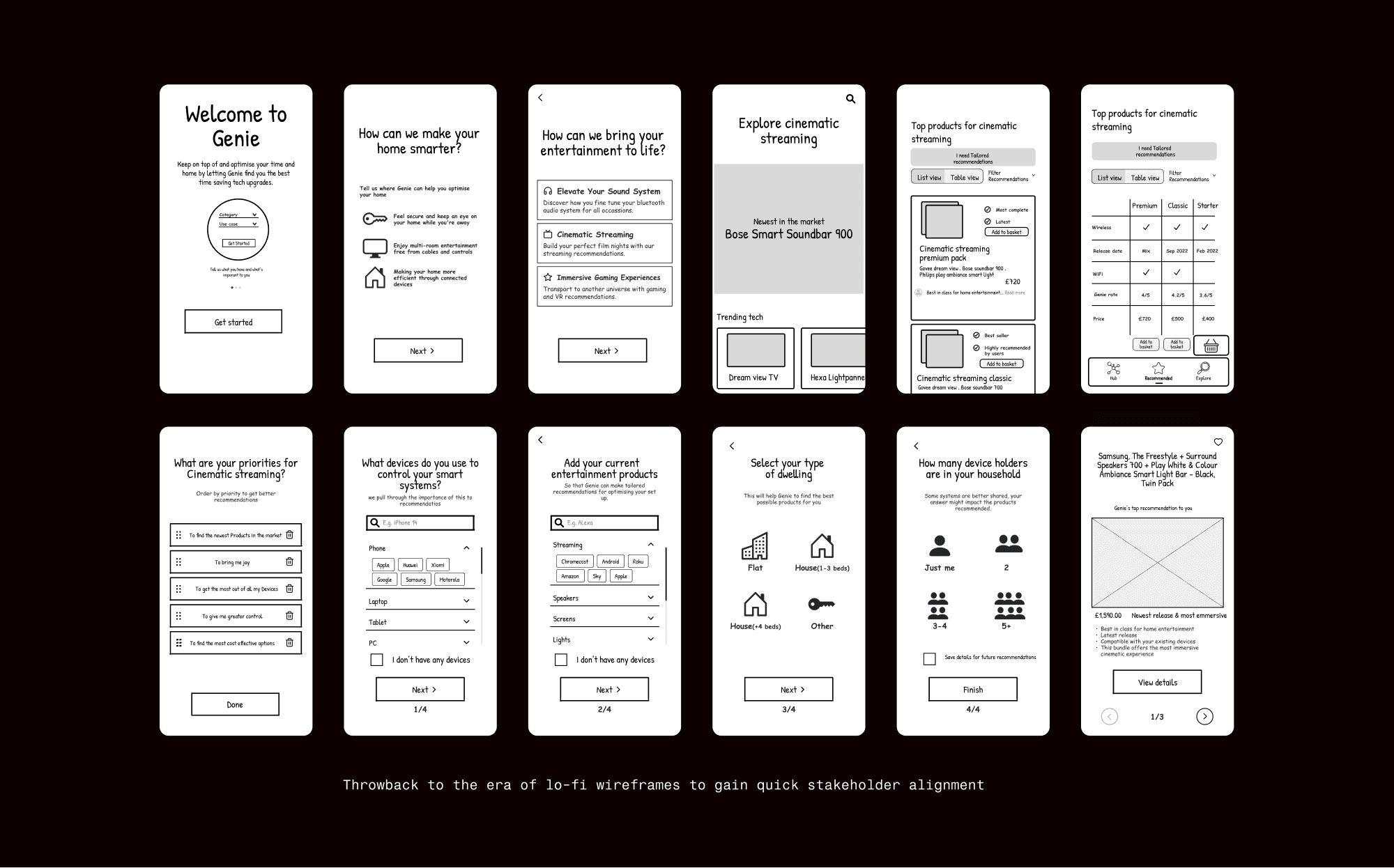
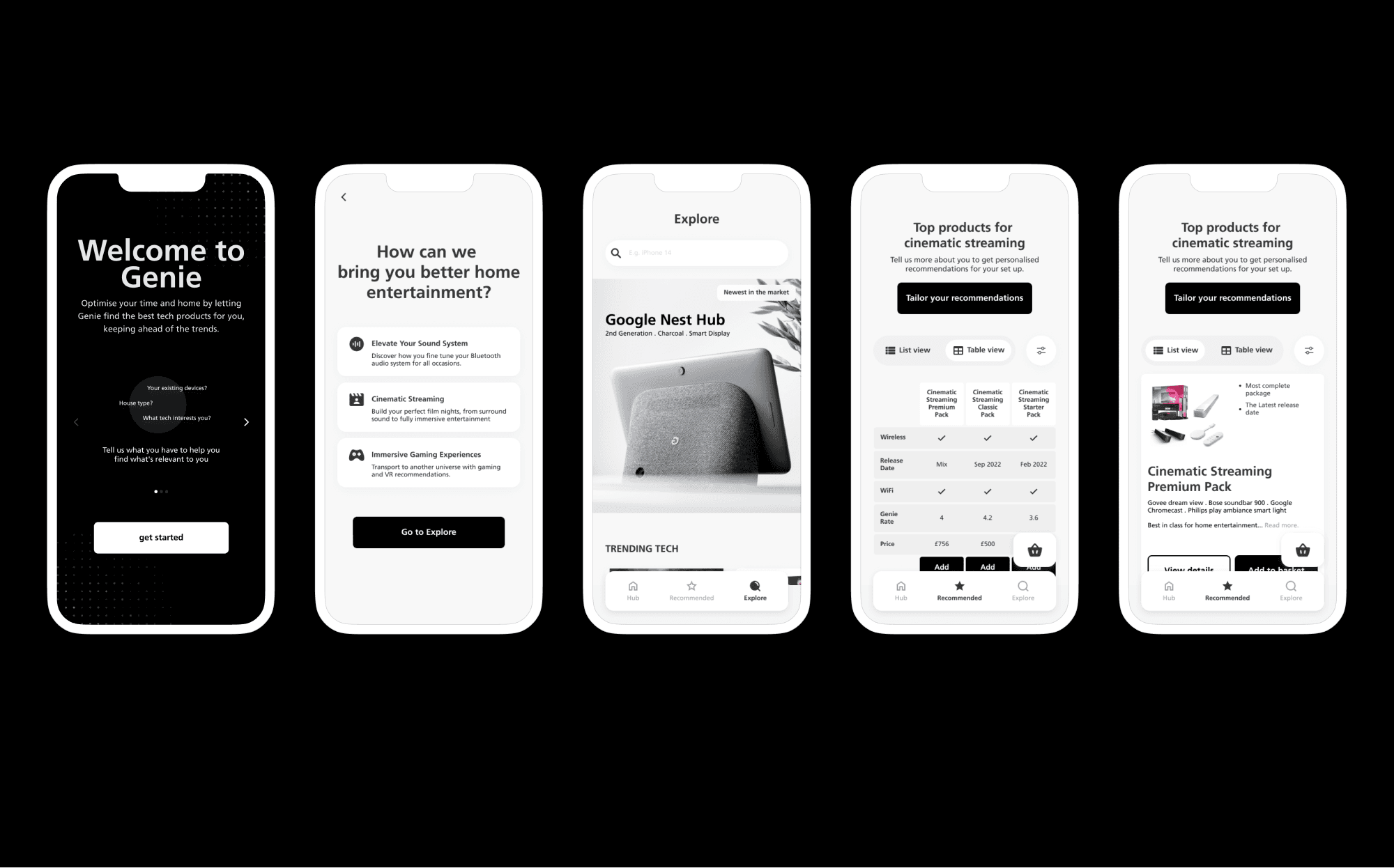
We created a prototype to test the proposition. This included a brief quiz to get a better understanding of the setup the users had at home, and then gave realistic recommendations based on those.
We also crafted a visual identity from scratch to create an illusion of a market-ready product.
[OUTCOMES]
The results were mixed.
Both moderated and unmoderated participants had a relatively even split between those who found the product either useful or unnecessary. Interestingly, many of those who did not like it, cited that the product would take away their favourite part of buying tech: the research! Our hypothesis around how comfortable participants were to disclose personal information regarding their home and tech set up got validated: many found it acceptable with the adequate context.
The reactions were varied. However, alongside the heat map results, they contained exactly the kind of nuance an R&D proposition needs before committing to a build.
The results were mixed.
Both moderated and unmoderated participants had a relatively even split between those who found the product either useful or unnecessary. Interestingly, many of those who did not like it, cited that the product would take away their favourite part of buying tech: the research! Our hypothesis around how comfortable participants were to disclose personal information regarding their home and tech set up got validated: many found it acceptable with the adequate context.
The reactions were varied. However, alongside the heat map results, they contained exactly the kind of nuance an R&D proposition needs before committing to a build.
Our goal was to validate whether the proposition appealed to customers, and whether smart home tech was the right product area to focus on.
After running a few workshops getting the stakeholders aligned on what the exact goals should be, we landed on four questions:
Is the proposition clear?
Are people comfortable sharing basic household data in exchange for personalised recommendations?
How do people find the setup experience
Are they willing to save their details for later?
Participants were split into two groups: 11 in moderated 1:1 interviews, and around 150 in an unmoderated interactive survey via Maze with an embedded prototype. Heatmap analysis added an additional layer of usability insight.
The results were mixed.
Both moderated and unmoderated participants had a relatively even split between those who found the product either useful or unnecessary. Interestingly, many of those who did not like it, cited that the product would take away their favourite part of buying tech: the research! Our hypothesis around how comfortable participants were to disclose personal information regarding their home and tech set up got validated: many found it acceptable with the adequate context.
The reactions were varied. However, alongside the heat map results, they contained exactly the kind of nuance an R&D proposition needs before committing to a build.
Results
Christie's was regularly using 40+ email types across regions, all with slightly varied brand expression and mutliple ways of displaying similar types of content due to lack of consistent rules. This led to considerable inefficiencies as well as an outdated look.