Brella

Brella

2021

2021

Brella offers an all-in-one solution for in-person, virtual, and hybrid events of all sizes. Their AI-powered matchmaking was already empowering event attendees and sponsors with meaningful connections and measurable ROI. However, most event organisers had no idea how to create a fully virtual event - the industry was undergoing dramatic transformation as the pandemic started. Attendees adopted the new world order quickly, but organisers seemed to struggle to adapt, and Brella wanted to further understand how their platform could make this easier. More specifically: event managers would regularly leave setting up the platform until too late in the process. This meant that they would not share the login links early, which led participants to not fill in their information, and thus miss out on some great networking opportunities. Less networking -> participants got less out of their events -> lower retention rates for Brella!

Client

Brella

Year

2021
Services

UX Research, Ideation, UI Design

Services

UX Research, Ideation, UI Design

Brella

2021

(Context)

Event managers are among the most organised people on the planet, but the profession is also one of the top 5 most stressed. The pandemic exacerbated this.

One of the knock off effects of the new world order meant event managers did not onboard into all their tools early enough. The tools included Brella, an AI-assisted networking tool. However, the tool required the event managers to get set up correctly prior to events, in order to facilitate participants to schedule relevant meetings. The process included multiple time sensitive elements.

I organised and ran 10 in-depth hour-long interviews, split evenly between customers with and without dedicated success manager support.

The findings were clear: without proactive support, managers had no idea what a healthy setup timeline looked like. We'd simply never told them. Since we were all doing this for the first time due of the pandemic, we realised we had never established what a healthy timeline looks like either. Telling users to do things "earlier" was actually way too abstract.

Event managers are among the most organised people on the planet, but the profession is also one of the top 5 most stressed. The pandemic exacerbated this.

One of the knock off effects of the new world order meant event managers did not onboard into all their tools early enough. The tools included Brella, an AI-assisted networking tool. However, the tool required the event managers to get set up correctly prior to events, in order to facilitate participants to schedule relevant meetings. The process included multiple time sensitive elements.

I organised and ran 10 in-depth hour-long interviews, split evenly between customers with and without dedicated success manager support.

The findings were clear: without proactive support, managers had no idea what a healthy setup timeline looked like. We'd simply never told them. Since we were all doing this for the first time due of the pandemic, we realised we had never established what a healthy timeline looks like either. Telling users to do things "earlier" was actually way too abstract.

[Process]

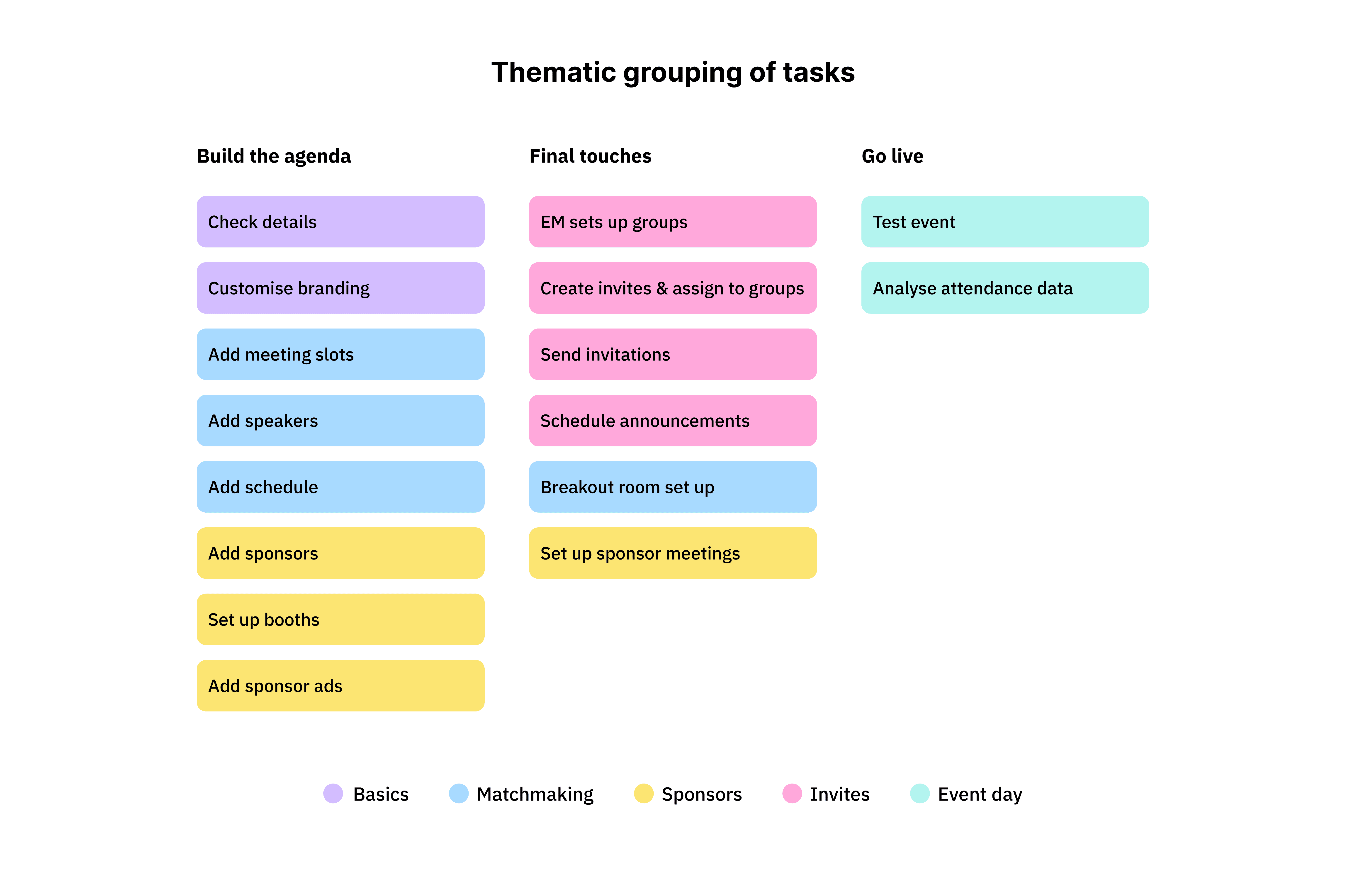
We gathered all of our internal experts and long term partners, and mapped out what a successful timeline looks like.

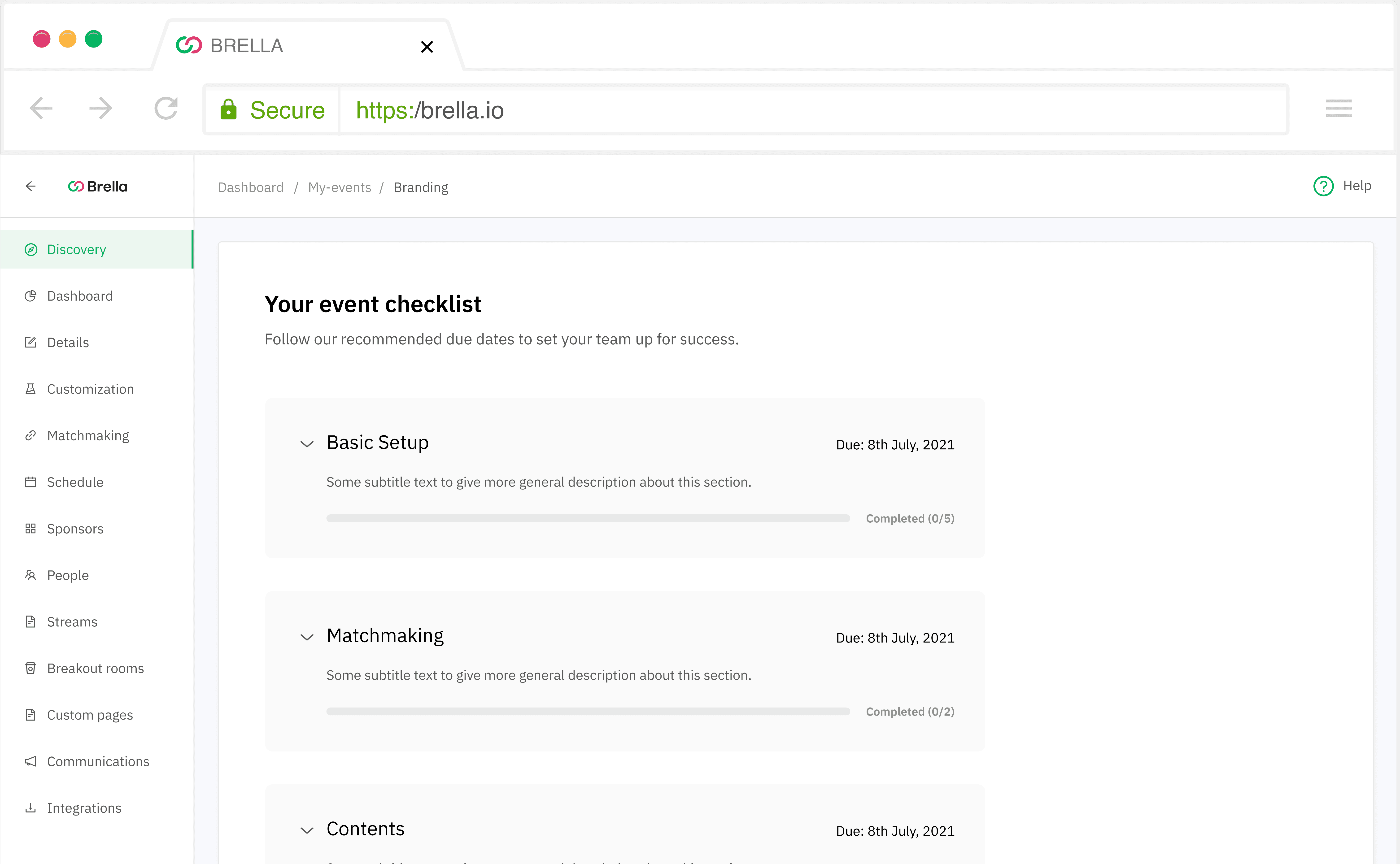
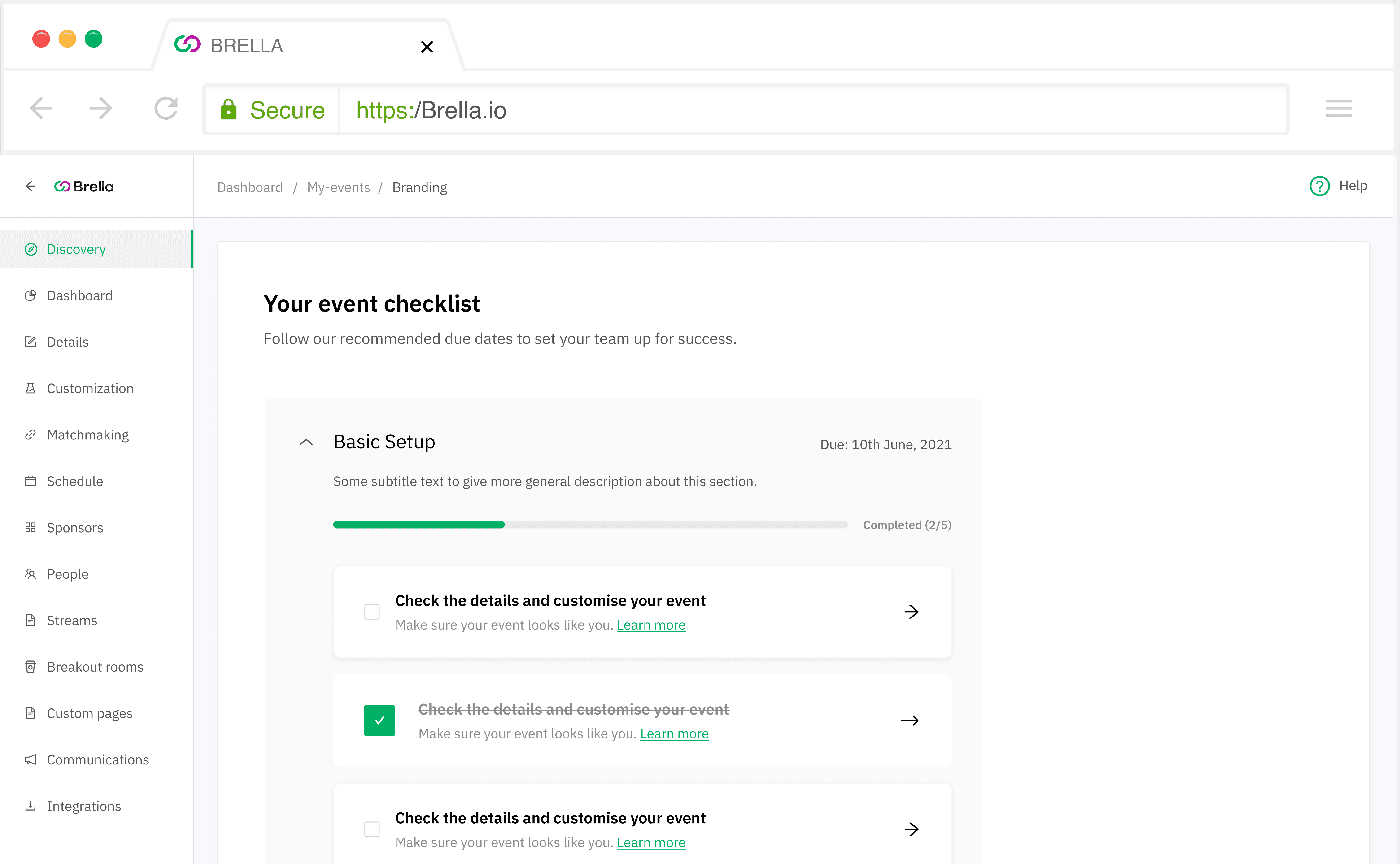
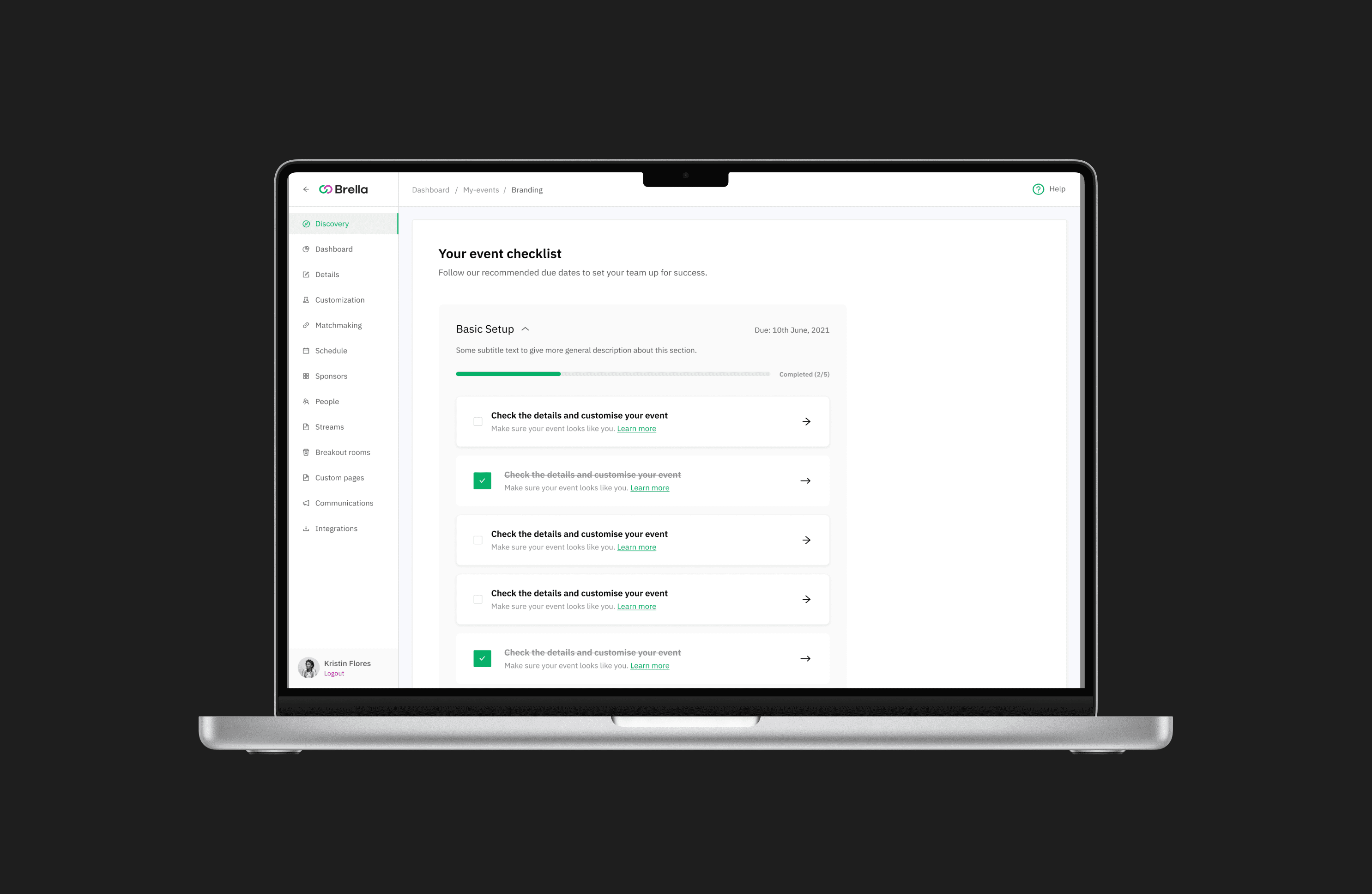
We then designed an automated checklist on the home dashboard that calculates task deadlines from the event date, with automatically triggered gentle reminder emails when milestones are missed, and automatically flags to the Customer Success team to step in where needed.

[OUTCOMES]

Organisers could focus on what they do best. Attendees had a better chance of finding meaningful networking matches, as the platform was properly set up in time.

Organisers could focus on what they do best. Attendees had a better chance of finding meaningful networking matches, as the platform was properly set up in time.

Event managers are among the most organised people on the planet, but the profession is also one of the top 5 most stressed. The pandemic exacerbated this.

One of the knock off effects of the new world order meant event managers did not onboard into all their tools early enough. The tools included Brella, an AI-assisted networking tool. However, the tool required the event managers to get set up correctly prior to events, in order to facilitate participants to schedule relevant meetings. The process included multiple time sensitive elements.

I organised and ran 10 in-depth hour-long interviews, split evenly between customers with and without dedicated success manager support.

The findings were clear: without proactive support, managers had no idea what a healthy setup timeline looked like. We'd simply never told them. Since we were all doing this for the first time due of the pandemic, we realised we had never established what a healthy timeline looks like either. Telling users to do things "earlier" was actually way too abstract.

Organisers could focus on what they do best. Attendees had a better chance of finding meaningful networking matches, as the platform was properly set up in time.

Results

Christie's was regularly using 40+ email types across regions, all with slightly varied brand expression and mutliple ways of displaying similar types of content due to lack of consistent rules. This led to considerable inefficiencies as well as an outdated look.